Buying Your First Machine?
Call +86-13958915221
You‘re running a double row blown film line at high output—500, 600, maybe 800 kg per hour. The machine is engineered for productivity. Then the bubble starts acting up. One minute it’s breathing—diameter expanding and contracting in a steady rhythm. The next minute it‘s wobbling, swaying side to side like it’s trying to escape the air ring. Film gauge goes erratic. Width fluctuates. By the time you catch it, you‘ve already lost a full roll to scrap.
Bubble instability is the single biggest productivity killer on a high‑output blown film machine. Double row designs are especially sensitive because the two independent air rings create more variables—and more opportunities for imbalance. This guide walks through the two main types of instability, their root causes, and a systematic troubleshooting path that doesn’t rely on trial and error. You‘ll go from “what’s wrong?” to “fixed” in less time than it takes to scrap another roll.
Before you touch any dials, identify what the bubble is actually doing. The fix for breathing is different from the fix for wobbling.
The bubble expands and contracts in a regular cycle—like breathing in and out. The layflat width fluctuates rhythmically. This is often called “heavy breathing”. Breathing cycles can be short or long, but the pattern is predictable and repeating.
Breathing usually points to a melt‑related cause: inconsistent melt feed, temperature oscillation in the extruder, or surging from the screw. It can also come from pressure fluctuations in the IBC (internal bubble cooling) system if your line has one.
The bubble sways side to side without a consistent rhythm. It drifts left, then right, sometimes touching the air ring walls. Film thickness varies circumferentially—thicker on one side, thinner on the other.
Wobbling almost always points to an airflow or geometry problem. Uneven cooling from the air ring, off‑center die alignment, or non‑uniform die gap are the usual suspects. If the wobble is directional—always swaying toward one side—the air ring is likely off‑center relative to the die.
Below is a quick reference table for instability types and likely causes:
| Instability Type | Pattern | Most Likely Cause | First Check |
|---|---|---|---|
| Breathing | Regular expansion/contraction | Melt feed inconsistency or temperature oscillation | Check screw speed stability; verify barrel temperatures |
| Wobbling | Random lateral sway | Airflow imbalance or geometry misalignment | Check air ring centering; verify die gap uniformity |
| Flutter | High‑frequency vibration | Excessive air velocity from air ring | Reduce blower speed |
| Frost line oscillation | Vertical up‑down movement | Ambient temperature changes or IBC sensor issue | Check IBC sensor height |
On double row machines, the air ring has two independent cooling rows—inner and outer. Each row has its own airflow control. When they’re not balanced, the bubble becomes unstable.
The most common cooling problem on double row lines is pressure imbalance between the two air ring rows. If the outer row pressure is too high, the bubble gets pushed outward and becomes misshapen. If the inner row pressure is too high, the bubble collapses inward.
Check each row‘s independent air flow control. Many operators assume the air ring is “set” and never touch it again. But air pressure drifts—filters clog, blowers wear, and duct connections loosen.
Fix: With the line running at operating speed, adjust the outer row air pressure down in small increments (5–10% at a time) until the bubble centers itself. If the bubble is being pushed to one side, the pressure on that side of the air ring is too high. Use a manometer to measure pressure at multiple points around the ring—they should be within 2–3% of each other.
The frost line is where the molten film crystallizes and becomes solid. Its height relative to the air ring is critical. If the frost line is too high, the film stays molten too long and the bubble becomes floppy. If it‘s too low, the film cools too quickly and becomes rigid, leading to tearing.
The ideal frost line position depends on your resin and output rate, but a good starting point is 5–10 cm above the air ring exit. For double row designs, the frost line should be stable and horizontal—not tilted or oscillating vertically.
Fix: Adjust the frost line height by changing the cooling air temperature or flow rate. For a frost line that’s too high, increase cooling (lower air temperature or higher flow). For a frost line that‘s too low, decrease cooling. On machines with IBC, the internal cooling air also affects frost line position—adjust IBC airflow in small increments.
Not every instability comes from the air ring. Sometimes the melt itself is the problem.
At high output rates, the screw needs to deliver enough thermal energy to fully melt the resin. If the melt temperature is too low, the polymer doesn‘t flow evenly. The melt strength varies, and the bubble becomes unstable.
Operators often respond by increasing screw speed—which makes the problem worse because faster speed means less residence time and even lower melt temperature. The right response is to raise barrel temperatures, not screw speed.
Fix: Increase the barrel temperature in the compression and metering zones by 5–10°C. Watch the melt pressure reading—it should remain stable, not spike. If melt pressure drops after the temperature increase, you’re on the right track.
Screw surging happens when the feed rate into the screw fluctuates. The screw alternately starves and floods, creating output pulses that show up as bubble breathing.
Common causes: a bridging hopper (material hangs up and then drops in chunks), incorrect feed zone temperature (too hot or too cold), or worn screw flights that can‘t maintain consistent conveying.
Fix: Check the hopper for bridging—tap the hopper walls or use a mechanical agitator if your hopper has one. Verify feed zone temperature: for LDPE/HDPE, the feed zone should be cool enough to prevent premature melting (typically 30–50°C). If the screw is worn, you’ll need a replacement—Chaoxin‘s self‑developed 30:1 and 32:1 ultra‑high speed double alloy screws offer extended wear resistance.
Double row machines have more geometric variables than single row designs. Two geometry problems account for most wobbling issues.
The die gap is the narrow opening where molten polymer exits the die. If the gap varies around the circumference, the melt exits at different velocities. One side of the bubble stretches faster than the other, creating a tilted or asymmetrical bubble.
Fix: Measure the die gap at 8–12 points around the die circumference using feeler gauges. The variation should be within ±0.05mm. If you find a tight spot, loosen the die bolts at that location and re‑torque to spec. If the gap is consistently off on one side, the die may need to be re‑machined or replaced.
If the air ring is even slightly off‑center relative to the die, the bubble receives uneven cooling. One side cools faster than the other, and the bubble drifts toward the cooler side.
Fix: Use a centering tool (or a simple dial indicator) to check the air ring alignment. The air ring should be concentric with the die within ±0.5mm. Most air rings have adjustment screws or bolts that allow you to shift the ring in small increments. Make adjustments, run a test, and repeat until the bubble is centered.
When the bubble is unstable, follow this sequence. It moves from easiest to most involved.
Start with the air ring. Is the bubble wobbling to one side? Check air ring centering. Is the bubble breathing? Check inner vs. outer row pressure balance. Clean the air ring slots—dust and debris are common and often overlooked.
If airflow checks out, move to melt temperature. Is the melt temperature appropriate for the output rate? For LDPE at 500+ kg/hr on a double row machine, target melt temperature is typically 190–210°C. If it‘s lower, raise barrel temperatures.
If temperature is correct, check screw feed. Is the hopper bridging? Is the feed zone temperature stable? Listen for surging—if the screw motor load oscillates, you have a feed problem.
If feed is stable, check geometry. Measure die gap uniformity. Verify air ring centering. These checks take 15 minutes but solve most wobbling problems that airflow adjustments can‘t fix.
If nothing works, consider resin. Some resin grades have inherently low melt strength. Add 5–10% LDPE to linear PEs to improve bubble stability. Or switch to a lower melt index resin with higher melt strength.
Post this list next to your machine. Each check takes less than a minute.
Air ring slots – Clean and free of debris. Uneven airflow is the most common cause of wobbling.
Blower pressure – Stable, not fluctuating. Pressure gauge should hold steady within ±2%.
Melt temperature – Within target range for your resin and output rate. Thermocouples should read consistently across zones.
Screw motor load – Steady, not oscillating. Load variation >5% indicates surging.
Hopper feed – Material flowing freely, no bridging. Tapping the hopper should produce consistent flow.
Die gap – Uniform around circumference. Check weekly with feeler gauges.
Air ring centering – Concentric with die. Check monthly with dial indicator.
Frost line – Stable and horizontal, not oscillating vertically.
Q: Can I run the double row machine without inner cooling?
A: Technically yes, but you‘re leaving productivity on the table. The inner cooling row is what gives double row machines their high output capability. Running without it reduces cooling efficiency and limits your maximum output. If you’re having stability issues with inner cooling active, the solution is to balance the inner/outer airflow, not to disable one row entirely.
Q: Why does instability start after 2 hours of running, not at startup?
A: This is a classic sign of thermal drift. The extruder and die take time to reach thermal equilibrium. As components heat up, clearances change, and the melt temperature profile shifts. Check your thermocouples—if they‘re reading correctly but the melt is getting hotter, the heater bands may be overshooting. Also check the cooling water temperature; if it rises during the run, cooling efficiency drops.
Q: Does resin moisture affect bubble shape?
A: Yes—and more than most operators realize. Moisture in the resin turns to steam in the extruder, creating bubbles in the melt that disrupt flow and cause instability. For hygroscopic resins like PLA or nylon, drying is essential. For LDPE/HDPE, moisture is less critical but can still cause issues if the resin has been stored improperly. The solution: dry the resin to the manufacturer’s specification and keep hoppers sealed.
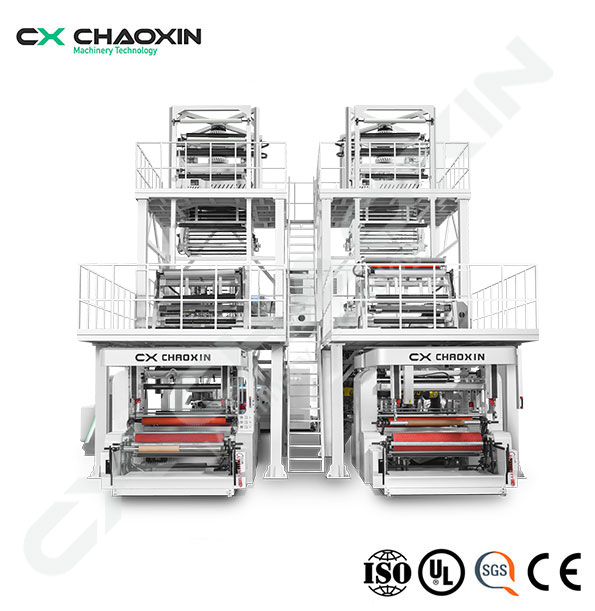
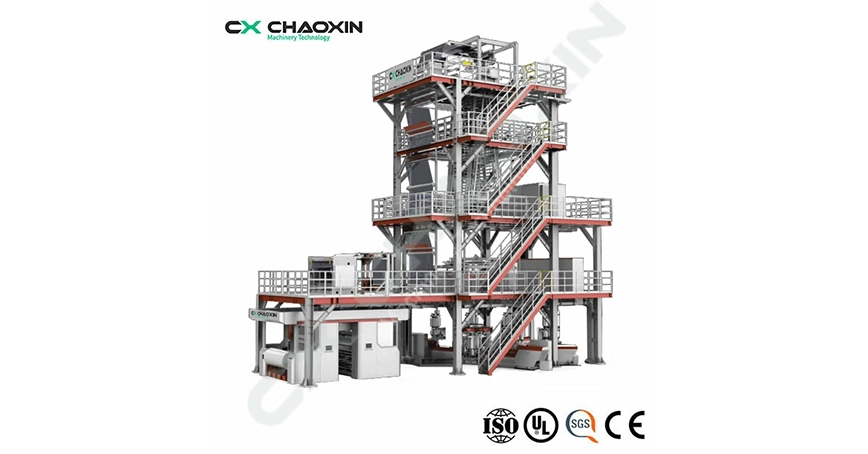
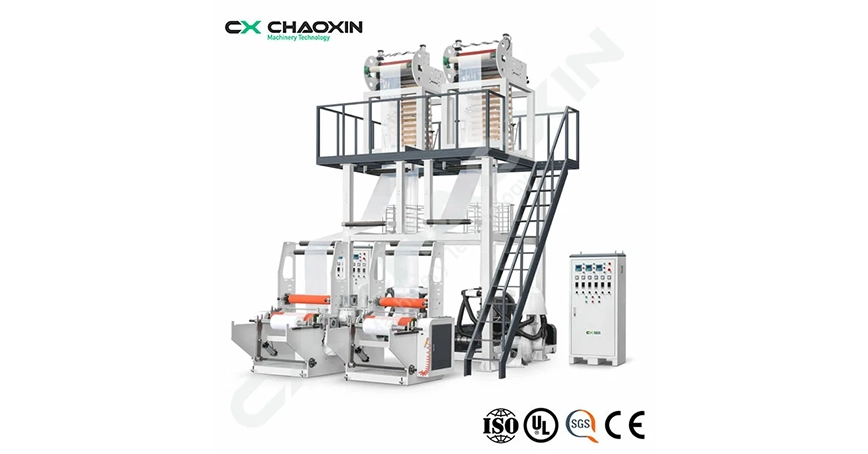
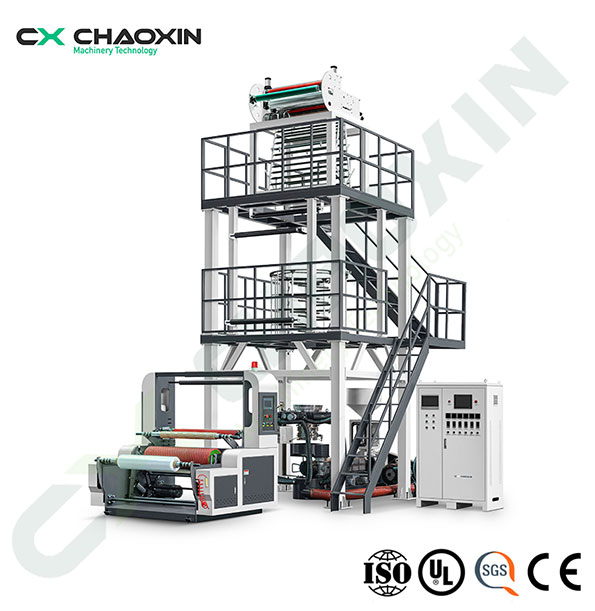
Chaoxin‘s LDPE/HDPE High Speed Twin Star Film Blowing Machine is engineered for productivity without compromising stability. The extruder uses self‑developed 30:1 and 32:1 ultra‑high speed double alloy screws, which provide the mixing and melt uniformity needed for stable bubble formation at high output rates. The screws are paired with motors from GE, Siemens, and Brook for consistent drive performance.
The machine incorporates complete 6S management standards in manufacturing, ensuring precision assembly that minimizes geometry issues like die gap non‑uniformity and air ring misalignment. Chaoxin sets an industry precedent with a 3‑year warranty on core components, reflecting confidence in the equipment‘s durability under demanding production conditions.
For operators running high‑output lines, the combination of robust screw design, precision assembly, and stable drive systems reduces the variables that cause bubble instability. But even the best equipment needs correct setup and regular maintenance—which is why the checklist and troubleshooting path above are essential tools for every shift.
Need help stabilizing your double row blown film line or upgrading to a high‑speed twin‑star machine? Contact Chaoxin for a consultation or quote on the LDPE/HDPE High Speed Twin Star Film Blowing Machine. Share your current output rate, resin type, and bubble stability issues—their technical team can recommend the right screw configuration and air ring setup for your application.
ZHEJIANG CHAOXIN MACHINERY TECHNOLOGY CO., LTD.
Booth No:B104
Time: September 22 – 24, 2026
Add: 107, Amir Timur Street, 100047, Tashkent, Uzbekistan
Exhibition Hall:Central Pavilion, UzExpoCentre, Hall 1
Email: cx1@chaoxin.cn
WEB: www.zjchaoxin.com





 English
 Pусский
 Español