Buying Your First Machine?
Call +86-13958915221
You’re running a film extrusion line—producing packaging film, agricultural film, or industrial-grade sheeting. The blown film machine is the heart of your operation, and when it stops, your entire production stops. Maintenance isn’t just about fixing what breaks—it’s about preventing breakdowns before they happen. This guide collects 16 of the most frequently asked maintenance questions from production managers on the floor, with practical answers based on real-world experience. From screw cleaning schedules to die head alignment and air ring care, these are the issues that keep maintenance teams busy and production managers up at night.
Preventive maintenance is the foundation of reliable film production. A well-maintained machine runs longer, produces better quality film, and costs less to operate than one that’s only fixed when it breaks. The key is knowing what to do and when to do it.
The screw should be pulled for cleaning every 1,500 to 2,000 operating hours, or whenever you switch resin types. Different polymers have different degradation characteristics—switching from HDPE to LDPE, for example, can leave residues that affect the next run. Regular screw cleaning prevents material buildup that can degrade film quality and reduce output.
Screen pack changes should be based on back pressure rise, not calendar time. Monitor the pressure gauge during operation—when back pressure increases significantly, it’s time to change the screen pack. In practice, this typically means every 8 to 24 hours of continuous operation, depending on material purity and additive content.
Lubricating a rotating die head while the machine is running requires an automatic lubrication system that feeds grease continuously during operation. If your machine doesn’t have this feature, schedule lubrication during planned shutdowns. Never attempt to lubricate moving parts while the machine is running without proper safety guards in place.
Heater bands should be replaced when temperature fluctuation exceeds ±3°C and calibration doesn’t resolve the issue. Inconsistent heating leads to melt temperature variations that affect film thickness, clarity, and mechanical properties. Regular inspection of heater bands during scheduled maintenance can catch issues before they affect production.
Clean the air ring by disassembling it and wiping with a soft cloth and alcohol. Avoid using water or compressed air that might force debris into critical areas. Never use abrasive materials or sharp tools that could scratch the air ring’s precision-machined surfaces. Scratches disrupt airflow and cause uneven film thickness.
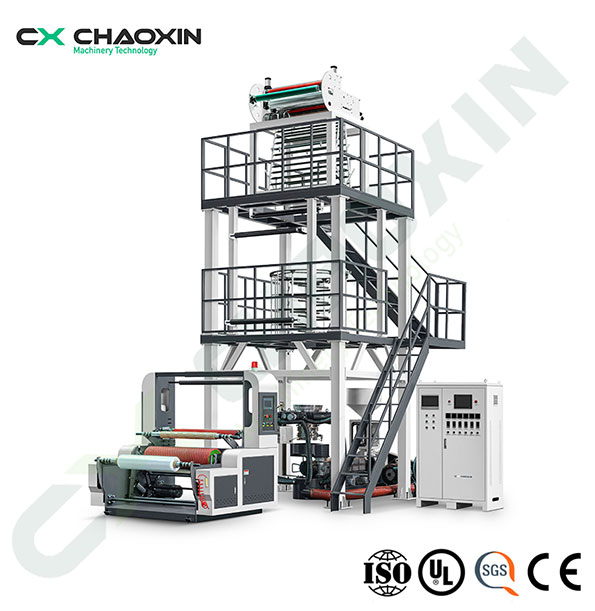
The die head and screw are the most critical components of any film blowing line. Their condition directly determines film quality, output rate, and energy efficiency.
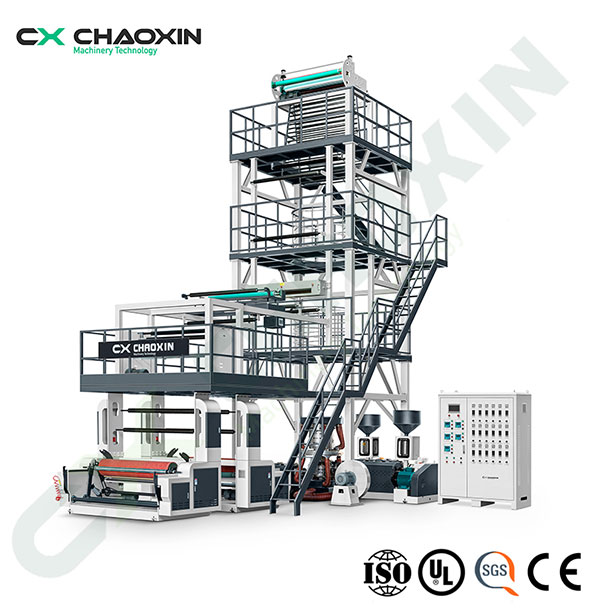
Calcium carbonate and other mineral fillers are highly abrasive. To prevent premature screw wear, use a bimetallic screw with a wear-resistant alloy coating and increase feeding zone cooling to reduce friction. The Chaoxin ABA machine uses an optimized screw design with higher anti-corrosion and anti-wear capability, extending service life significantly.
Measure die lip gaps using a feeler gauge at multiple points around the die circumference. Take measurements both cold (at ambient temperature) and hot (at operating temperature). Thermal expansion changes the gap—understanding both values helps you set the correct gap for consistent film thickness.
Not recommended. HDPE and LDPE require different compression ratios for optimal melting and mixing. Using the wrong screw for your primary resin reduces output, increases energy consumption, and produces inferior film quality. If you run both materials regularly, consider dedicated screws for each.
Clean internal flow channels using copper brushes and specialized cleaning compounds. Never use sharp or hard tools that could scratch the flow surfaces—scratches create nucleation points for material buildup and degrade film quality. Regular purging with cleaning compounds between material changes helps keep channels clean.
Melt pressure fluctuation typically indicates screen pack blockage or screw wear. A gradual pressure increase suggests the screen pack is clogging and needs changing. Erratic pressure swings may indicate screw wear or material feed issues. Monitor pressure trends—sudden changes require immediate investigation.
The extruder and die head get most of the attention, but auxiliary systems are equally important for consistent film quality and production efficiency.
The internal bubble cooling (IBC) system requires regular inspection of air flow paths and temperature sensors. Clean the IBC air ring and check for blockages in the air delivery system. Proper IBC operation is critical for film cooling rate, which affects clarity, mechanical properties, and output.
Clean winder tension rollers weekly or whenever you notice film slippage or uneven winding. Dust and polymer residue on tension rollers cause inconsistent tension control, leading to telescoped rolls and waste.
Check air ring leveling using a spirit level placed across the air ring’s top surface. An unlevel air ring produces uneven airflow around the bubble, resulting in inconsistent film thickness and poor gauge control. Re-level after any maintenance that disturbs the air ring position.
Change gearbox oil every 2,000 to 3,000 operating hours or annually, whichever comes first. Use the oil grade specified by the manufacturer—typically an ISO VG 460 or 680 synthetic gear oil for heavy-duty extruder gearboxes. Never mix different oil types or grades.
Maintain a minimum stock of:
Screen packs and breaker plates
Heater bands and thermocouples
Drive belts and fuses
Air ring seals and gaskets
Emergency stop switches and safety interlocks
Common fasteners and hardware
Having these parts on hand prevents extended downtime while waiting for deliveries.
Use a simple Excel spreadsheet or maintenance log book to track operating hours and completed maintenance tasks. Record: date, operating hours, maintenance performed, parts replaced, and any observations. This low-tech approach works for most production environments and provides valuable data for planning future maintenance.
How often should I pull out the screw for cleaning?
Every 1,500 to 2,000 operating hours, or when switching resin types.
What is the recommended screen pack change frequency?
Based on back pressure rise—typically every 8 to 24 hours of continuous operation.
Can I use the same screw for HDPE and LDPE?
Not recommended—different compression ratios are required.
What does melt pressure fluctuation indicate?
Typically screen pack blockage or screw wear.
Effective maintenance isn’t complicated—it’s systematic. Track operating hours, follow recommended service intervals, and document everything. Request a quote or maintenance consultation → —Chaoxin‘s team can help you establish a maintenance program tailored to your specific machine and production schedule.
Chaoxin Machinery Technology Co., Ltd. is a professional manufacturer of film blowing machines, including biodegradable film lines, three-layer co-extrusion systems, and ABA film blowing machines. The ABA HDPE/LDPE High Speed Film Blowing Machine features an optimized screw design with 30:1 or 32:1 L/D ratio, offering higher extrusion volume and extended service life with superior anti-corrosion and anti-wear properties. The machine achieves up to 30% energy savings compared to conventional designs. Applications include packaging film, agricultural film, and industrial sheeting. Chaoxin provides comprehensive technical support and spare parts availability. Connect with Chaoxin to discuss your film production requirements, material specifications, and maintenance needs.
ZHEJIANG CHAOXIN MACHINERY TECHNOLOGY CO., LTD.
Booth No:A1-1532
Time:November 17 – 20, 2026
Add:Jl. Gatot Subroto No.1, RT.1/RW.3, Gelora, Kecamatan Tanah Abang, Kota Jakarta Pusat, Daerah Khusus Ibukota Jakarta 10270
WEB: www.zjchaoxin.com





 English
 Pусский
 Español