Buying Your First Machine?
Call +86-13958915221
ou have watched the reject pile grow. The printed film runs through the sealing station, but the electric eye lost its mark four cycles ago. The machine keeps sealing anyway, producing bags with half the design missing or the cut going straight through the brand logo. After ten minutes, an operator notices and pulls metres of scrap from the stack.
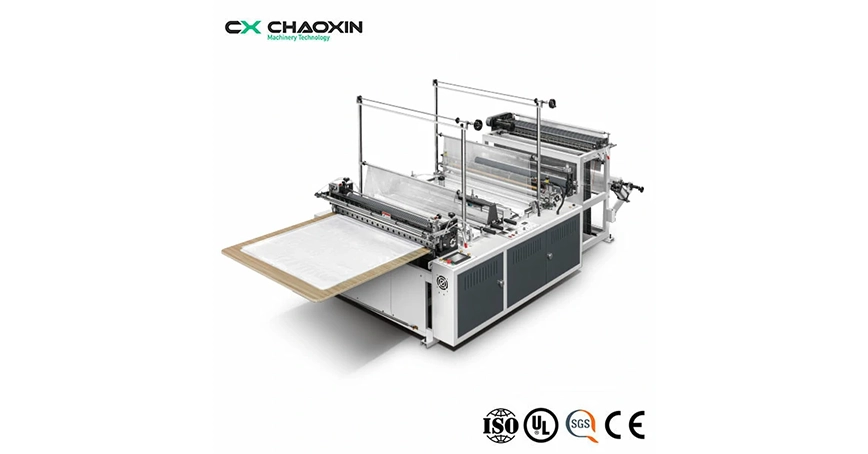
A side‑seal bag making machine with photoelectric registration stops automatically when a mark is lost. The machine halts immediately when the photocell fails to detect a registration mark, signalling the operator to realign the web. This prevents hundreds of metres of waste per incident. This guide looks at four machine behaviours that determine whether a bag line runs lean or bleeds film: how the motor advances the web, what happens when the electric eye sees nothing, how the seal bar meets different bag styles, and what the folding station can do beyond a simple centre fold.
Side‑seal bag makers start with a roll of polyethylene film—LDPE, HDPE, LLDPE, PP, OPP, CPP—then fold it, seal the side seam, cut, and stack. The distance the web travels between the sensor reading a mark and the seal bar closing is the single most critical variable.
A step motor drives the feed rollers. Each electrical pulse moves the motor a fixed angular increment. The microcomputer counts pulses to advance the exact length set by the operator or measured by the photocell. A servo motor does the same but with a closed‑loop encoder that confirms each pulse, eliminating the positional drift that step motors can accumulate under heavy acceleration. For printed film, that drift matters. At 180 bags per minute, a lost microstep of even 0.1 mm repeats, and after a hundred cycles the cut falls half a bag length off the registration mark.
For unprinted white or black bags—industrial liners, shipping sacks—the machine runs in fixed‑length mode, ignoring the photocell entirely. The step motor or servo simply advances the programmed length every cycle. This mode is faster and simpler, but it assumes the film doesn’t stretch or slip. If the tension control is weak, bag length will wander.
Multi‑colour print on T‑shirt bags or retail merchandise bags cannot tolerate any drift. The optional servo motor uses a closed‑loop encoder and continually adjusts the web position based on the photocell reading. The result is a stack of 500 bags where every logo is within 0.5 mm of the same position.
Side‑seal bag makers use a photocell register system (often a SICK or equivalent industrial sensor) to detect the printed registration mark. The sensor is mounted on a rail that can be slid across the web. The operator aligns it with the mark. When the mark passes, the sensor sees a dark‑to‑light transition and tells the controller: “cut here.”
If the sensor sees the marks at the correct interval, the machine runs. But the moment a splice goes through, or the ink density drops, or the film slips, the sensor may see nothing. On a poorly designed machine, that means the controller keeps cycling—the motor keeps advancing the same number of pulses, and the seal bar keeps firing, producing bag after bag with the design cut in half.
Auto‑stop on lost mark is the feature that stops this waste. When the sensor fails to detect a mark for one expected cycle, the machine triggers a malfunction alarm and halts immediately. The operator realigns the web, clears the fault, and restarts. The rest of the roll remains usable.
In a 120 bag/minute line, a 10‑second delayed stop would produce 20 bad bags. Auto‑stop cuts that to 2 bad bags at most. Across a year, that adds up to kilometres of saved film.
Each heating zone on the side‑sealing and bottom‑sealing stations has its own thermocouple and controller. If a zone drifts 5 °C above setpoint, the LCD touch panel shows the deviation. If it drifts 10 °C, the machine stops, sounding an alarm. For LDPE, an overheated zone creates brittle seals that crack when the bag is filled. Without auto‑stop, a line could run for hours producing bags that fail the first time a customer puts product inside.
The machine comes with interchangeable sealing blades. The table below shows which blade matches which bag type.
| Sealing Blade Type | What It Produces | Example Bag |
|---|---|---|
| Side seal sealing blade | Vertical side seam only | Flat garment cover, industrial tube liner |
| Bottom sealing blade | Bottom seal after cut | Bread bag with open top, produce bag |
| Double sealing blade | Two seals with a perforation between | Roll‑fed T‑shirt bags, grocery bags on a roll |
| Heat‑sealing decorative border | Serrated or ruffled edge seal | Gift bag, boutique shopping bag, candy pouch |
| Cold cutting | No heat, clean cut | Heat‑sensitive laminate, biodegradable film |
The machine also includes automatic double‑sided adhesive tape and automatic hole punching as standard. For garment bags, the tape on the flap makes the bag resealable. For retail displays, the hanging hole fits pegboard racks.
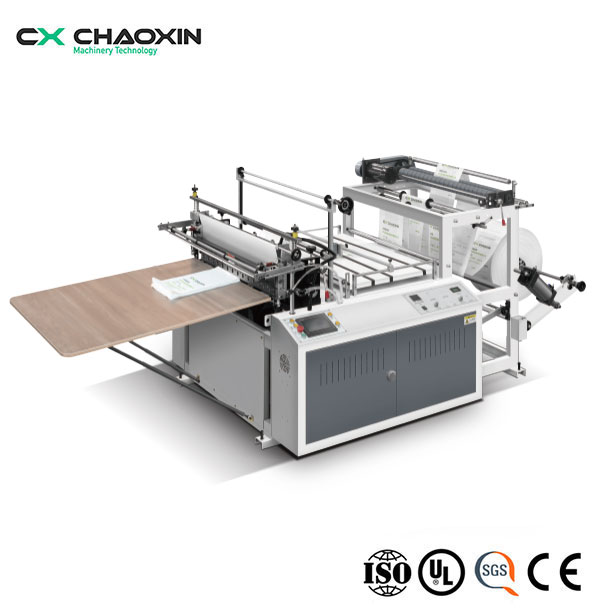
A folding station is not just for centre folds. With servo‑driven folding boards and forming cones, this platform produces 13 different folding and gusset configurations.
Common types you will recognise from finished bags:
Centre fold – Merchandise bags with the opening on one side.
Side gusset – The folded panels on the edges of coffee or pet food bags, allowing the bag to expand when filled.
Block bottom – The flat standing base found on bread bags and many grocery produce bags.
Folded with handle reinforcement – A separate film strip added at the handle attachment point, used for soft‑loop T‑shirt bags.
An optional wicketer system takes the folded stack of bags and pins them through the folded edge, so they can be loaded directly onto retail display wickets without manual sorting.
The machine processes the common polyolefin films used in packaging, without requiring frequent re‑threading or speed reduction.
LDPE – Clear garment bags, produce roll bags, thin liners. Runs at full speed down to 15 microns.
HDPE – Stiff, opaque merchandise bags with the crisp feel. Seals cleanly at 25–50 microns.
LLDPE – Stretchable frozen food bags, heavy‑duty liners. Requires slightly higher seal temperature but runs without sticking.
PP – High‑clarity bread bags and premium retail packaging. Handles without static buildup if the machine includes a static eliminator.
OPP – Crisp, transparent candy bags and bakery packaging. More brittle than LDPE, so cold cutting is sometimes preferred.
CPP – Heat‑sealable inner liners for laminated packaging structures.
Feeding is supported by magnetic powder tension control and EPC/LPC edge guidance. As the roll diameter decreases, tension decreases proportionally, keeping the web from becoming slack or over‑stretched. The edge guide detects lateral drift and shifts the unwind stand to keep the film centred over the sealing station.
Thread a sample of your printed film. Run at 50% speed while watching the registration count on the touch panel. The machine should count every mark. If it drops marks, try adjusting the sensor sensitivity or adding a contrasting backer under the film. For low‑contrast marks (yellow on white, silver on clear), ask about a UV‑enhanced sensor.
Let the machine stabilise at operating temperature. Seal one bag, wait for the seal to cool to room temperature, then pull it apart. The film should tear outside the sealed area. If the seal separates at the interface, the temperature is too low or the dwell time too short. If the seal tears with melted residue along the separation line, the temperature is too high or the pressure excessive.
Run 100 bags in fixed‑length mode. Stop the machine. Lay the first bag and the 100th bag side by side. The length difference should be less than ±1.5 mm. If the 100th bag is shorter, the feed belt is slipping under acceleration or the step motor is losing microsteps. Tighten the belt or upgrade to a servo drive.
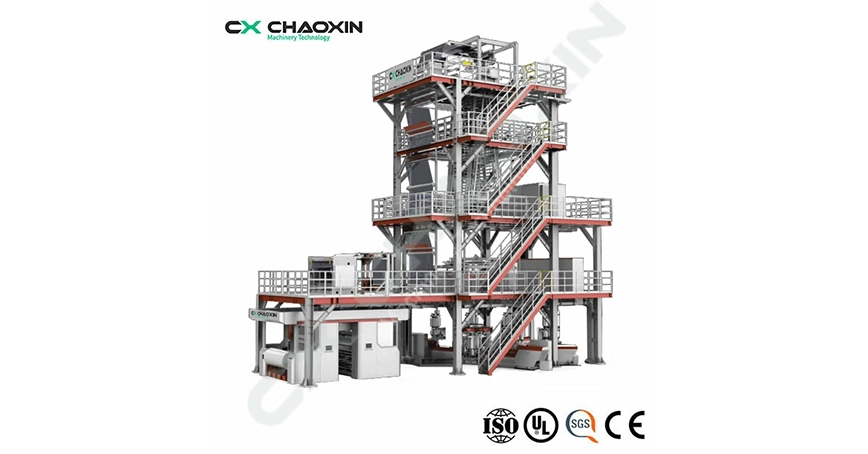
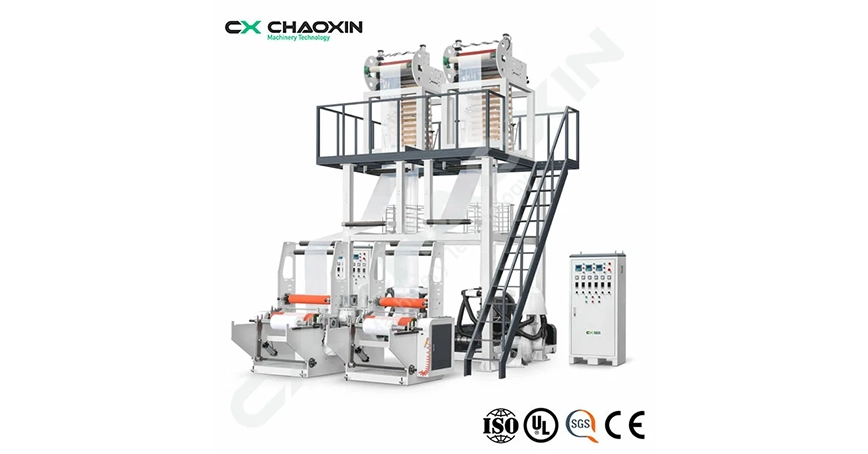
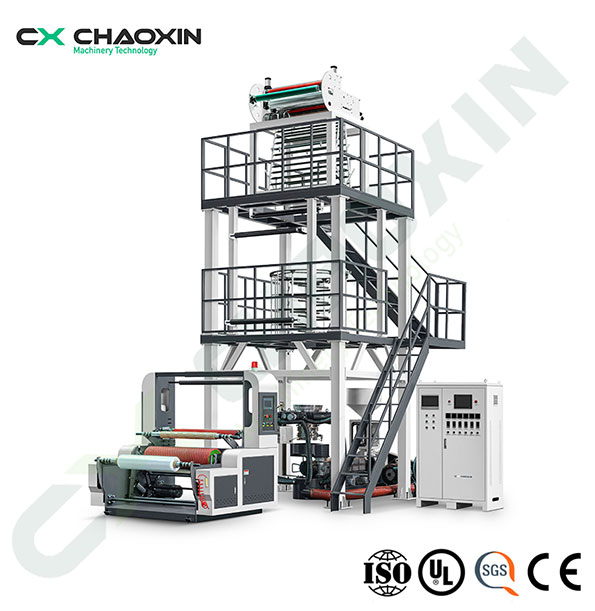
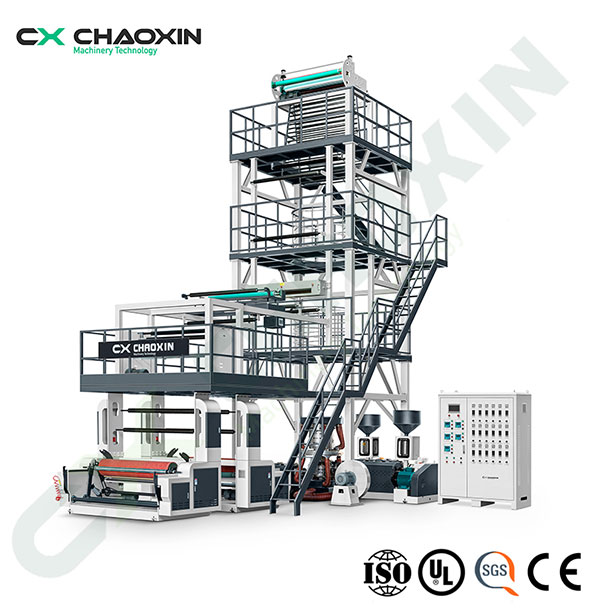
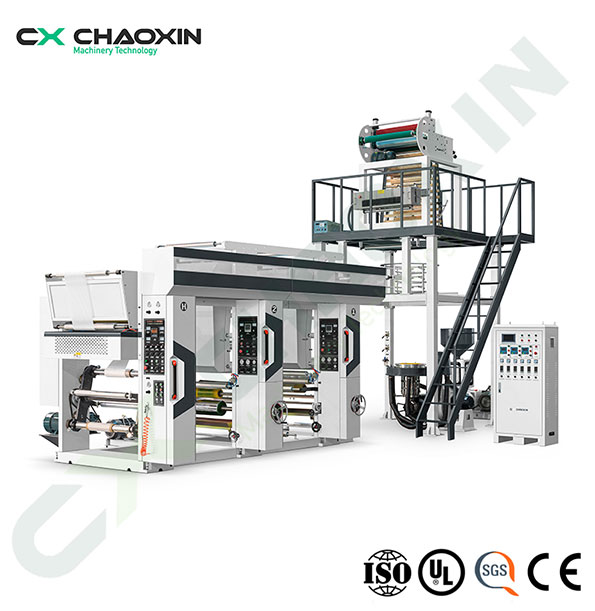
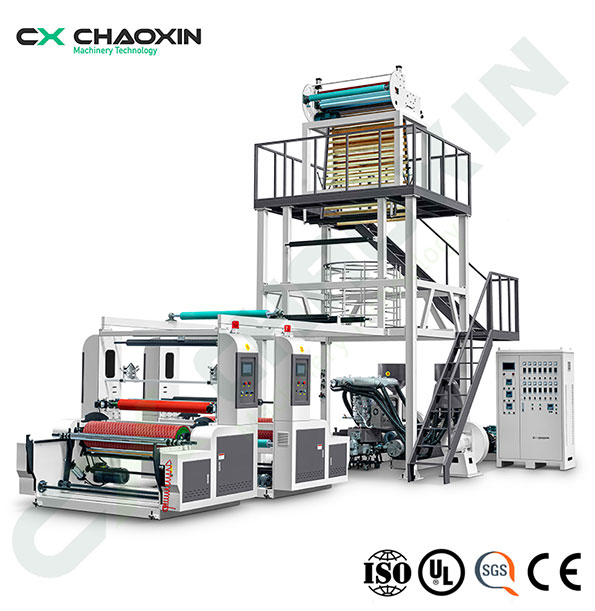
A bag making machine manufacturer with more than 9,800 machine installations across 68 countries and over 150 patents builds this side‑seal platform. The production facility follows 5S management, and the machines carry CE and ISO 9001 certifications. The same company supplies film blowing lines (including biodegradable and three‑layer co‑extrusion), printing presses, bag‑on‑roll winders, and full extrusion systems.
The side‑seal model includes microcomputer control, step motor feed (servo optional), photoelectric auto‑stop on lost mark, interchangeable sealing blades (side, bottom, double, decorative, cold cut), automatic double‑sided tape applicator, automatic hole punch, and 13 folding configurations. Output reaches 180 bags per minute. A three‑year warranty covers many parts.
For garment bag converters, heavy‑duty industrial sack producers, and retail bag manufacturers that change between unprinted white film and multi‑colour printed jobs daily, this side‑seal platform delivers consistent, waste‑reducing production without requiring a separate machine for every bag style.
ZHEJIANG CHAOXIN MACHINERY TECHNOLOGY CO., LTD.
Booth No:B104
Time: September 22 – 24, 2026
Add: 107, Amir Timur Street, 100047, Tashkent, Uzbekistan
Exhibition Hall:Central Pavilion, UzExpoCentre, Hall 1
Email: cx1@chaoxin.cn
WEB: www.zjchaoxin.com





 English
 Pусский
 Español