Buying Your First Machine?
Call +86-13958915221
You have watched the reject pile grow. The printed film runs through the sealing station, but the electric eye lost its mark four cycles ago. The machine keeps sealing anyway, producing bags with half the design missing or the cut going straight through the brand logo. After ten minutes, an operator notices and pulls metres of scrap from the stack.
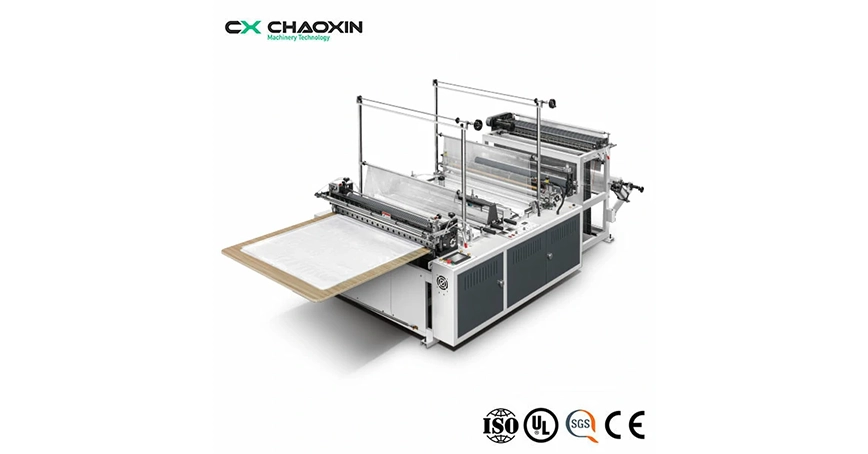
A side‑seal bag making machine with photoelectric registration stops automatically when a mark is lost. The machine halts immediately when the photocell fails to detect a registration mark, signalling the operator to realign the web. This helps prevent hundreds of meters of waste per incident. This guide walks through four specifications that distinguish an efficient automatic bag maker: feed drive design, photoelectric tracking, heat sealing options, and folding capabilities.
Side‑seal bag makers process rolls of polyethylene film—LDPE, HDPE, LLDPE, PP, OPP, CPP—by folding, sealing side seams, cutting to length, and stacking. Precision depends on how accurately the film moves between cycles.
The machine uses microcomputer control with a stepping motor for material feeding. An optional servo motor provides higher precision and faster response. The microcomputer sets bag length, counts bags, and adjusts for temperature drift. For printed film, the step motor advances by the repeat length measured by the photocell. A servo motor eliminates position accumulation error, achieving accurate cutting at speeds up to 120-180 bags per minute.
The machine also supports fixed‑length operation for unprinted film. Enter the desired length and thickness, and the step motor advances that exact length, regardless of draw down variations.
Two‑ or three‑colour shopping bags require registration within ±1 mm over thousands of cycles. Step motors can lose microsteps under high acceleration. The optional servo motor uses a closed‑loop encoder, reads registration marks via photocell, and repositions if drift occurs. The result: every bag aligns perfectly.
Side‑seal bag makers use a photocell register system (e.g., SICK) to detect printed marks. If the sensor fails to see a mark when expected—due to a splice, low ink contrast, or film slip—the machine triggers an alarm and stops automatically.
This auto‑stop on lost mark separates a production machine from a scrap generator. Without it, a misaligned web keeps cycling, producing hundreds of misregistered bags. With it, the machine stops within one to two cycles, preserving the rest of the roll. For a line running 120 bags/min, auto‑stop saves roughly 200 metres of film per event.
Heating elements on side‑sealing and bottom‑sealing stations are thermostatically controlled. If any zone overheats or fails to reach temperature, the controller triggers an alarm and stops the line. The LCD touch panel shows actual vs setpoint temperatures. For LDPE, a 5 °C overheat creates brittle seals that crack. Auto‑alarm prevents this.
Different bag constructions require different sealing blades.
| Feature | Function | Application |
|---|---|---|
| Side seal sealing blade | Forms vertical side seam | Flat bags, garment covers, industrial liners |
| Bottom sealing blade | Forms bottom seal after cut | Bread bags, produce bags, merchandise bags |
| Double sealing blade | Two seals with perforation | Roll‑fed T‑shirt bags, grocery bags on a roll |
| Heat‑sealing decorative border | Patterned edge seal | Gift bags, boutique shopping bags, candy bags |
| Cold cutting | Cuts without heat | Heat‑sensitive laminates, biodegradable films |
The machine also includes automatic double‑sided adhesive tape and automatic hole punching as standard. For garment bags, the resealable tape adds convenience. For retail displays, the hanging hole works for pegboard sales racks.
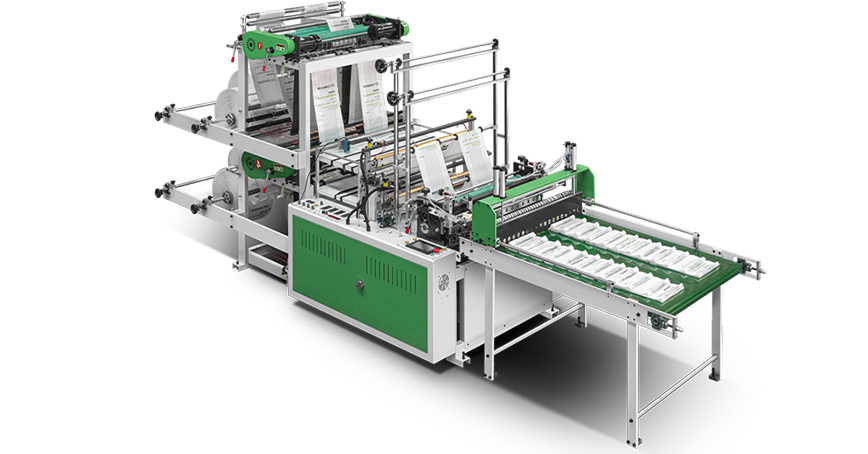
With servo drive and folding stations, the machine produces 13 folding and gusset formations.
Common types:
Centre fold – for merchandise bags
Side gusset – expands for coffee and pet food bags
Block bottom – standing base for bread and produce bags
Folded with handle reinforcement – for T‑shirt bags
A wicketer system is optional, stacking finished bags pinned through the folded edge for automatic off‑take.
The machine runs LDPE (garment bags, produce roll bags), HDPE (stiff merchandise bags), LLDPE (stretchable frozen food bags), PP (high‑clarity bread bags), OPP (candy bags), and CPP (heat‑sealable liners). For garment bags, it handles 15‑20 micron LDPE. For heavy‑duty sacks, it seals 150‑micron HDPE/LLDPE blends.
Feeding includes magnetic powder tension control and EPC/LPC edge guidance, maintaining consistent web tension and centering.
Run printed film at 50% speed. The machine should read every mark. If it drops marks, increase contrast or use a UV‑enhanced sensor.
After stabilising, seal a test bag, cool it, and pull apart. Film should tear outside the seal. If seal separates, temperature is too low; if melted residue appears, temperature is too high.
Run 100 bags in fixed‑length mode. Compare first and 100th bag length. Difference should be under ±1.5 mm. Larger variation indicates belt wear or microstep loss.
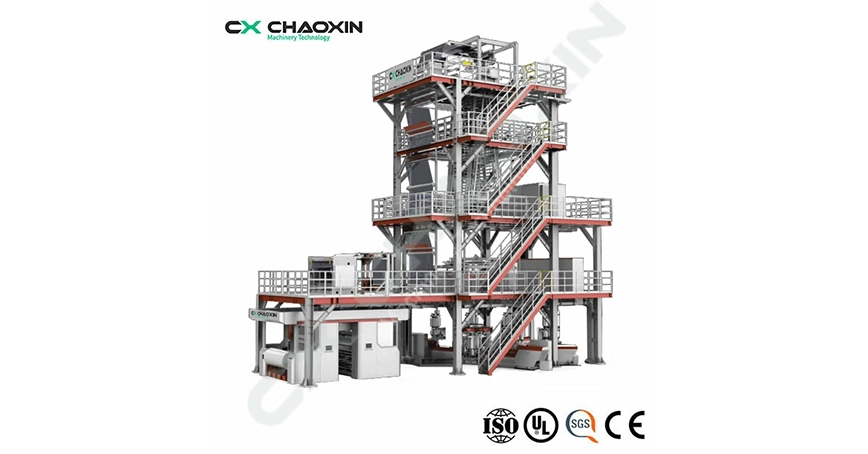
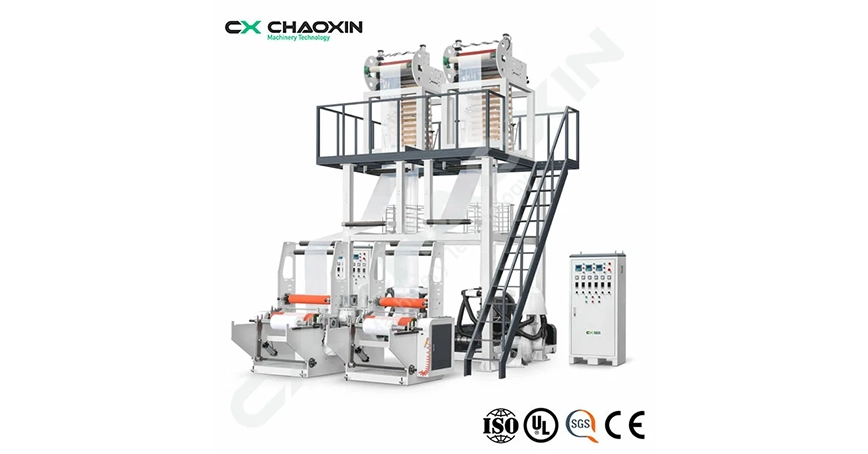
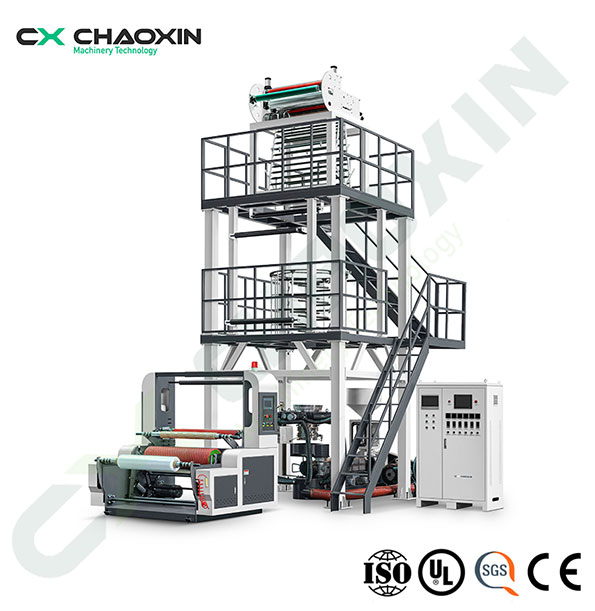
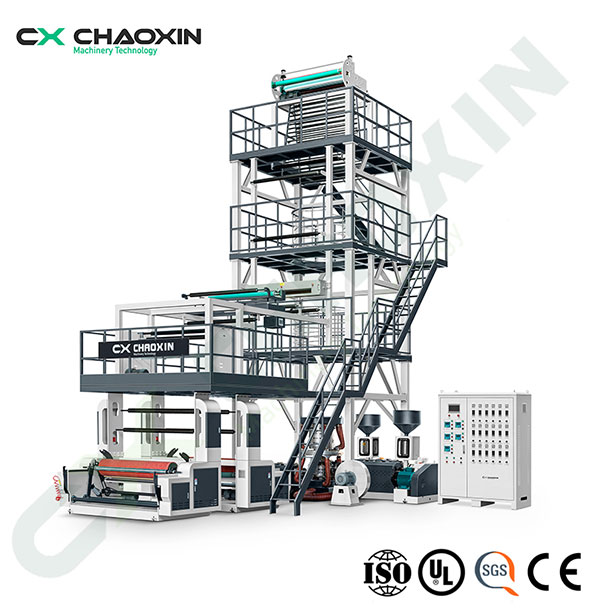
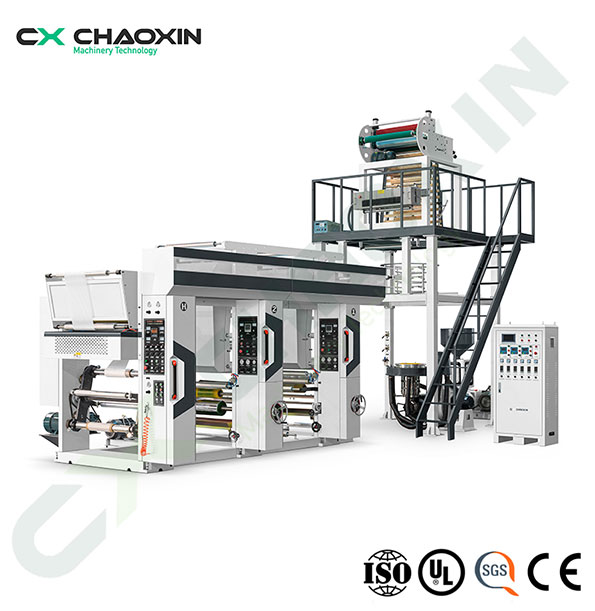
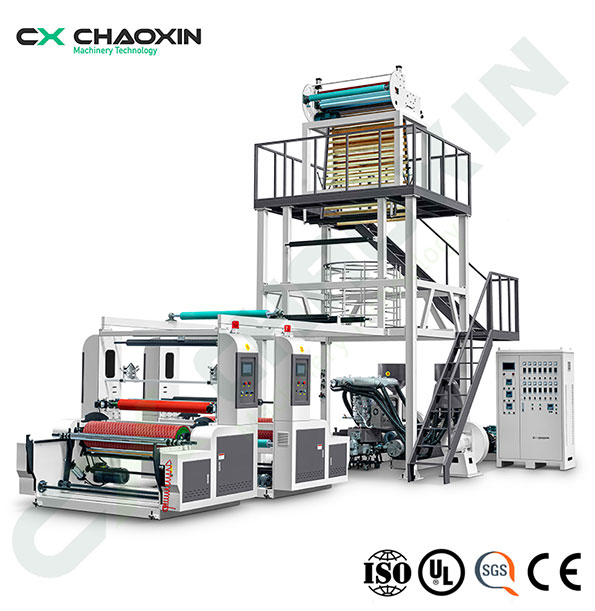
A manufacturer with over 9,800 installations in 68 countries and 150+ patents builds this side‑seal platform. It is produced under 5S management, with CE and ISO 9001 certifications. The machine includes microcomputer control, step motor feed (servo optional), photoelectric auto‑stop, multiple sealing blades, and automatic tape/hole punch. Output reaches 180 bags/min, with 13 folding types. A three‑year warranty covers many configurations. The same supplier also offers film blowing machines, printing machines, and bag‑on‑roll lines.
The side‑seal bag making machine suits garment bag converters, heavy‑duty sack producers, and retail bag manufacturers needing daily changeovers between unprinted and multi‑colour runs.
ZHEJIANG CHAOXIN MACHINERY TECHNOLOGY CO., LTD.
Booth No:B104
Time: September 22 – 24, 2026
Add: 107, Amir Timur Street, 100047, Tashkent, Uzbekistan
Exhibition Hall:Central Pavilion, UzExpoCentre, Hall 1
Email: cx1@chaoxin.cn
WEB: www.zjchaoxin.com





 English
 Pусский
 Español