Buying Your First Machine?
Call +86-13958915221
Polyethylene is a typical thermoplastic, presenting as an odorless, tasteless, and non-toxic combustible white powder. The polyethylene resin used for molding consists of extruded, pelletized wax-like granules with a milky-white appearance. The molecular weight of polyethylene ranges from 10,000 to 1,000,000, and materials with a molecular weight exceeding 1,000,000 are classified as ultra-high molecular weight polyethylene. The higher the molecular weight, the better its physical and mechanical properties, but processing performance decreases as the molecular weight increases. Therefore, the appropriate molecular weight and processing conditions must be selected based on the specific application. High molecular weight polyethylene is a processed structural material and load-bearing material, whereas low molecular weight polyethylene is only suitable for applications such as coatings, glazing agents, lubricants, and softeners.
The mechanical properties of polyethylene largely depend on the molecular weight, degree of esterification, and crystallinity of the compound. High-density polyethylene has a tensile strength of 20~25Mpa, while low-density polyethylene only has a tensile strength of 10~12Mpa. The elongation of polyethylene mainly depends on its density; a high density and high crystallinity result in poorer extensibility. Polyethylene offers excellent electrical insulation properties. Because it is a non-polar material (corrected from the source text's "non-insulating material" to reflect factual properties), its dielectric constant and electrical loss are almost independent of temperature and frequency. It has excellent high-frequency performance, making it highly suitable for manufacturing the insulation layers of various high-frequency cables and submarine cables.
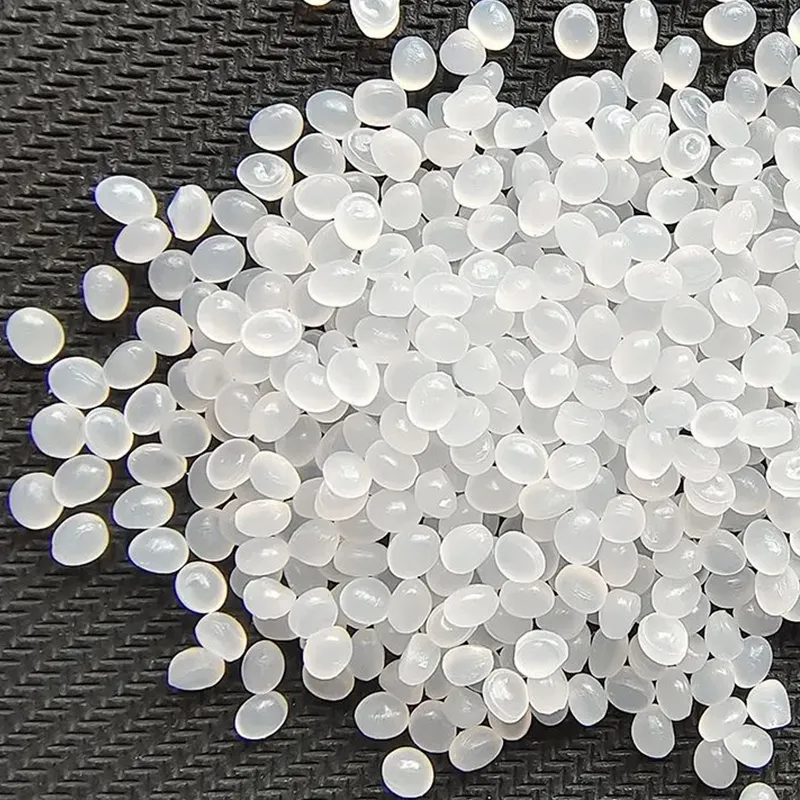
The density range of low-density polyethylene is 0.910~0.925g/cm³.
The molecular structure is a branched-chain type with different long and short branches on the main chain.
There are approximately 50 or fewer ethyl, butyl, or longer branches per 1,000 carbon atoms on the main chain.
Compared with high and medium-density polyethylene, it has a lower crystallinity (55%~65%), a lower softening point (108°C~126°C), and a wider melt index (0.2~80g/10min).
Because the chemical structure of low-density polyethylene is similar to paraffin hydrocarbons and does not contain polar groups, it has good chemical stability and possesses corrosion resistance against aqueous solutions of acids, alkalis, and salts.
Its electrical properties are excellent, featuring low electrical conductivity, a low dielectric constant, low dielectric loss, and high dielectric strength.
However, the heat resistance of low-density polyethylene is relatively poor, and it is not resistant to oxygen and photo-aging.
Therefore, to improve its aging resistance, antioxidants and ultraviolet absorbers are usually added to the resin.
Low-density polyethylene features good flexibility, extensibility, and transparency, but its mechanical strength is lower than that of high-density polyethylene and linear low-density polyethylene.
Low-density polyethylene is mainly used for manufacturing films.
Film products account for more than half of the total production of low-density polyethylene products, and are used for agricultural films as well as the packaging of various foods, textiles, and industrial products.
Low-density polyethylene has excellent electrical insulation properties and is commonly used as a coating material for wires and cables.
It is also used for injection-molded products and various toys, lids, boxes, and containers.
After blending with high-density polyethylene, it can be processed through injection molding and hollow molding to manufacture pipes and containers.
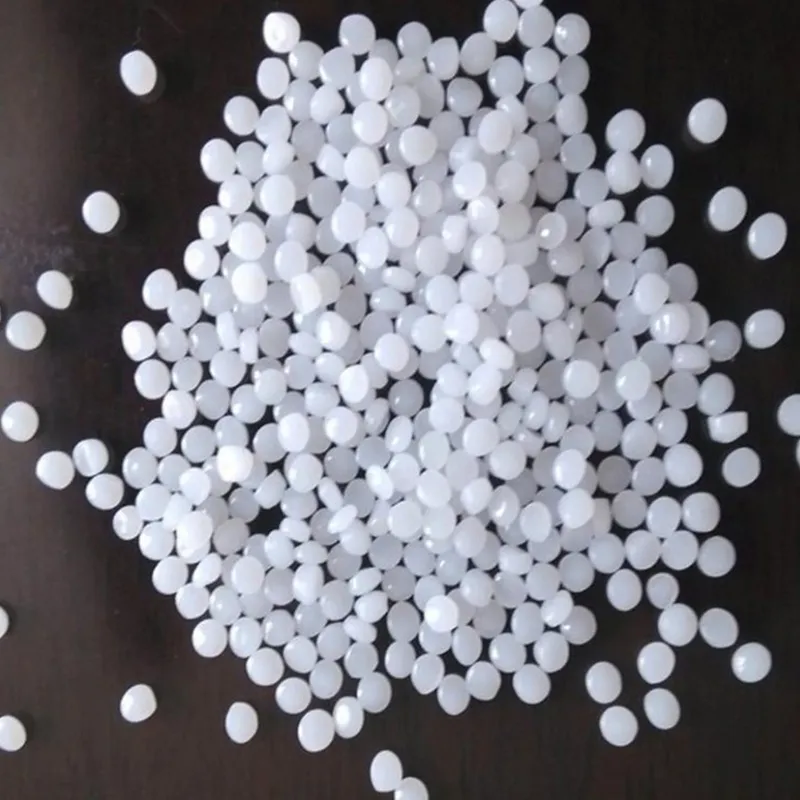
The high density of high-density polyethylene is 0.941~0.965g/cm³.
The molecular structure is linear with few branches, averaging only a few branches per 1,000 carbon atoms.
Compared with low-density polyethylene, high-density polyethylene has a crystallinity of 80%~90%, a high density, a higher use temperature, greater hardness and mechanical strength, and good chemical resistance.
The applications of high-density polyethylene differ from those of low-density polyethylene.
About 50%~70% of low-density polyethylene is used to manufacture films, whereas high-density polyethylene is mainly used to manufacture hollow hard products, accounting for about 40%~65% of its total consumption.
Specific uses include: manufacturing various bottles, cans, and industrial tanks, barrels, and other containers through blow molding.
Manufacturing various daily containers such as basins, barrels, baskets, hampers, and frames, as well as daily sundries and furniture through injection molding.
Manufacturing various pipes, strapping tapes, fibers, and monofilaments through extrusion molding.
In addition, it can be used to manufacture wire and cable coating materials and synthetic paper.
After adding a large amount of inorganic calcium salts, it can also be used to manufacture calcium plastic packaging boxes, furniture, doors, and windows.
Recently, high-density polyethylene has seen rapid development in the manufacture of high-strength ultra-thin films used as packaging materials for food, agricultural and sideline products, and textiles.
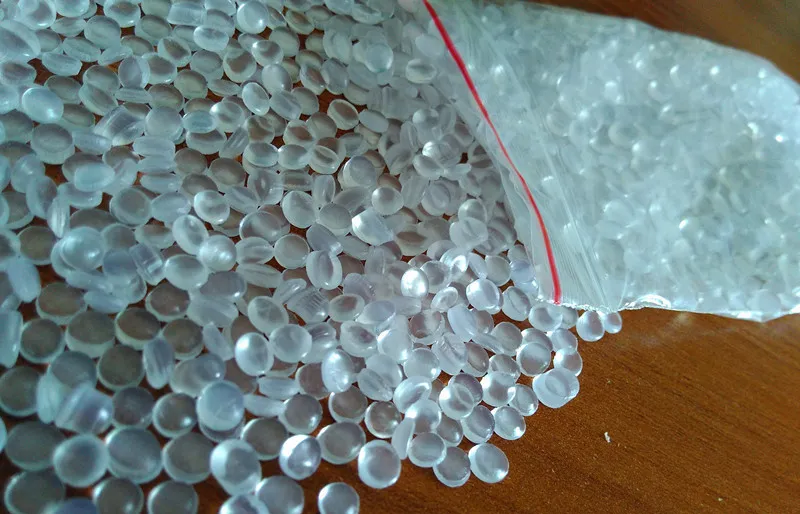
The density is 0.926~0.940g/cm³.
The molecular structure is a linear polymer with a number of branches falling between those of high-density polyethylene and low-density polyethylene.
The crystallinity is 70%~75%, and the softening temperature is 110°C~115°C.
In addition to possessing the combined properties of both high and low-density polyethylene, it also features excellent stress-cracking resistance, rigidity, and heat resistance.
It is most suitable for manufacturing bottles through high-speed blow molding, films for high-speed automatic wrapping, and various injection-molded and rotationally molded products, such as barrels and cans.
It can also be used for wire and cable coating layers.
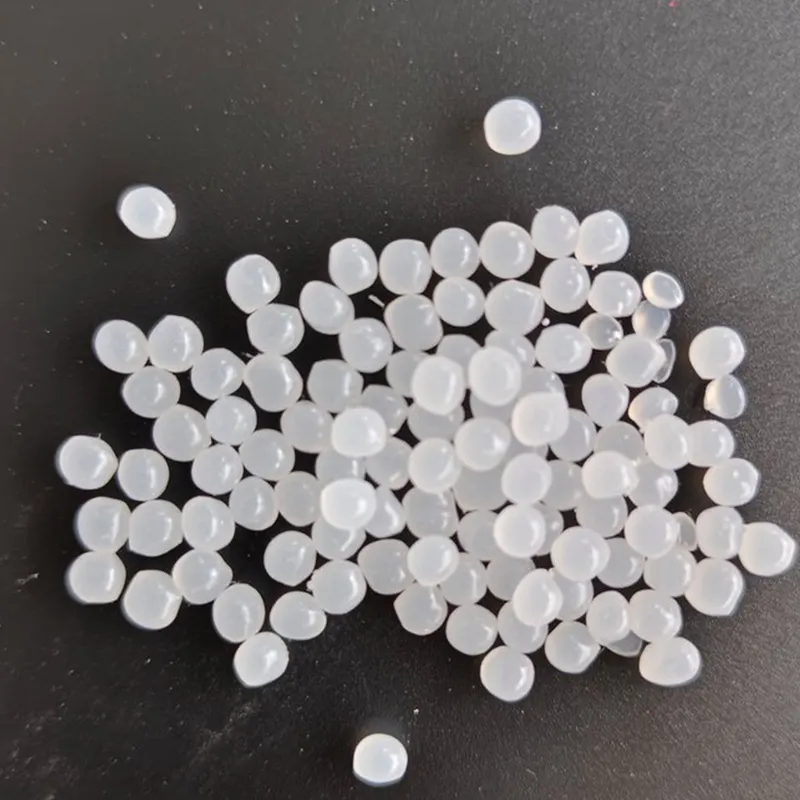
The density of linear low-density polyethylene is 0.910~0.925g/cm³.
Because the molecular side chains of linear low-density polyethylene are short branches, its molecular structure falls between linear high-density polyethylene and high-pressure low-density polyethylene with long branches, so its physical and mechanical properties are superior to ordinary low-density polyethylene.
In terms of mechanical properties, the tensile strength of linear low-density polyethylene is 50%~70% higher than that of ordinary low-density polyethylene, and the elongation is more than 50% higher.
The impact resistance strength, puncture strength, and low-temperature impact resistance are all superior to those of low-density polyethylene.
Regarding physical properties, at the same density, the melting point of linear low-density polyethylene is higher than that of low-density polyethylene, providing a wider range of operating temperatures.
The allowable operating temperature is 10°C~15°C higher than that of low-density polyethylene.
Linear low-density polyethylene can replace low-density polyethylene in manufacturing films, pipes, injection-molded products, hollow blow-molded containers, rotationally molded products, and wire and cable coating materials.
The mechanical properties of the manufactured products are better than those of low-density polyethylene.
Therefore, when manufacturing products of the same strength, linear low-density polyethylene products can be reduced in thickness.
ZHEJIANG CHAOXIN MACHINERY TECHNOLOGY CO., LTD.
Booth No:18.1F20
Time:October 15 – 19, 2026
Add:Canton Fair Complex (Pazhou), Guangzhou
WEB: www.zjchaoxin.com





 English
 Pусский
 Español