Buying Your First Machine?
Call +86-13958915221
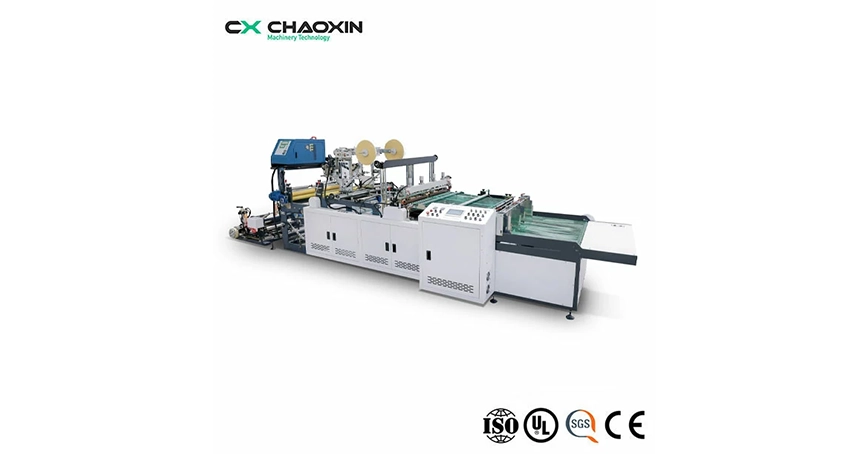
You're running a bag production line, and you've probably noticed that not all cutting methods are the same. Some machines use hot knives that melt through the film; others use cold cutting blades that shear cleanly. A bottom seal bag making machine that uses cold cutting delivers a different kind of finish—one that's particularly valuable for certain applications. The Single Layer Non-Stretch Heat-Sealing and Cold-Cutting Bag Making Machine was engineered to combine the strength of heat-sealed bottoms with the clean edge of cold cutting. This article walks through what makes the cold-cutting process different, why it matters for bag quality, and how the CX series handles HDPE and LDPE across a range of widths and speeds.
Q: What's the difference between hot cutting and cold cutting in bag making?
A: Hot cutting uses a heated blade to melt and seal the film simultaneously, which can create a fused edge. Cold cutting uses a sharp blade to shear the film cleanly after sealing—producing a cleaner, more precise edge without the melted bead that hot cutting can leave.
Q: What materials can this machine process?
A: The machine is designed for HDPE and LDPE films. These are the most common materials for flat bags, shopping bags, garment bags, and light-duty packaging applications.
In bottom seal bag production, the seal itself is what holds the bag together—but the cut edge is what the customer sees and feels. Hot cutting melts through the film, which can leave a rough, beaded edge that feels unfinished and can even cause layers to stick together in the stack. Cold cutting shears the film cleanly after the heat seal is formed, producing a sharp, consistent edge that looks professional and handles well in downstream operations. For garment bags, flat bags, and retail packaging where appearance matters, cold cutting delivers a noticeably superior finish.
The cold-cutting blade operates at ambient temperature. It doesn't melt or deform the film—it simply cuts through it with precision. The result is a clean edge that won't fuse to adjacent bags in the stack, won't leave melted residue on the blade, and won't create weak points at the cut line.
Cold cutting doesn't replace heat sealing—it complements it. The machine first applies heat to seal the bottom of the bag, creating a strong, leak-proof bond. Then the cold blade cuts through the sealed film. This two-step process gives you the best of both: a secure seal and a clean edge.
Single-layer bag making machines process one layer of film at a time, producing one bag per cycle. This configuration offers several practical advantages:
Single-layer machines are simpler to set up and operate, with fewer variables to control. The non-stretch design ensures that film feeds through the machine without elongation or distortion, which means consistent bag dimensions and less scrap.
The single-layer, non-stretch configuration is particularly well-suited for flat bags, garment bags, and other applications where dimensional accuracy is critical. The machine produces clean, consistent bags with precise bottom seals.
With fewer moving parts and a simpler film path, single-layer machines are generally easier to maintain than multi-layer systems. The CX series is designed for straightforward operation and routine maintenance.
The CX series offers four models covering a range of bag widths:
| Model | CX-600 | CX-800 | CX-1000 | CX-1200 |
|---|---|---|---|---|
| Suitable Materials | HDPE, LDPE | HDPE, LDPE | HDPE, LDPE | HDPE, LDPE |
| Bag Width | 550mm | 750mm | 950mm | 1150mm |
| Bag Length | 1800mm | 1800mm | 1800mm | 1800mm |
| Bag Thickness | 0.01-0.10mm | 0.01-0.10mm | 0.01-0.10mm | 0.01-0.10mm |
| Speed | 20-120 pcs/min | 20-120 pcs/min | 20-120 pcs/min | 20-120 pcs/min |
| Total Power | 6kw | 7kw | 8kw | 9kw |
| Dimension (L×W×H) | 3.2×1.2×1.9m | 3.2×1.4×1.9m | 3.2×1.6×1.9m | 3.4×1.8×1.9m |
| Weight | 1T | 1T | 1.2T | 1.2T |
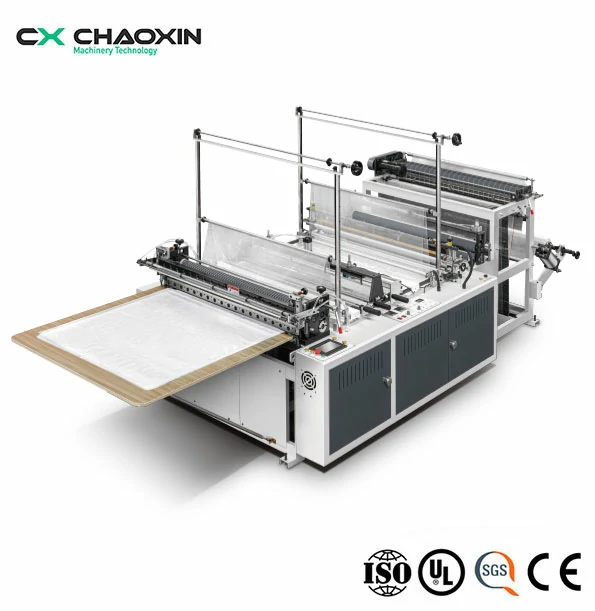
The CX series runs at 20-120 bags per minute. That range gives you flexibility: run slower for thicker films or more complex setups, and faster for high-volume commodity bags. The key is that the machine maintains consistent seal quality and cut precision across the entire speed range.
Film thickness, material type (HDPE vs. LDPE), and bag size all influence the ideal running speed. Thicker films may require slower speeds to ensure complete heat sealing; thinner films can run at the higher end of the range. The CX series allows you to adjust speed to match your specific production requirements.
At 120 bags per minute, the machine produces over 7,000 bags per hour. For a single-layer machine, this is competitive output that can support medium-volume production runs without requiring the complexity of multi-layer systems.
The CX series produces bottom-seal bags for a variety of applications:
Flat bottom-seal bags are used in retail, grocery, and convenience store environments. The clean cold-cut edge ensures that bags don't stick together in the stack, making them easier to open and use.
Garment bags require clean edges and consistent dimensions to protect clothing during storage and transport. The CX series delivers the precision that garment bag converters need.
For light-duty packaging applications—such as hardware, stationery, and small consumer goods—bottom-seal bags provide reliable protection at a competitive cost.
Q: Does cold cutting work with all film thicknesses?
A: The CX series handles film thicknesses from 0.01mm to 0.10mm. Within this range, the cold-cutting blade delivers clean, consistent cuts across HDPE and LDPE materials.
Q: What's the difference between bottom seal and side seal bags?
A: Bottom seal bags have the seal at the bottom—the film is folded and sealed across the width. Side seal bags have the seal along the side. Bottom seal is more common for flat bags, shopping bags, and garment bags.
Q: How does the non-stretch design affect bag quality?
A: Non-stretch feeding ensures that the film maintains its original dimensions as it moves through the machine. This prevents bag length variation and ensures consistent sealing position—critical for bags that need to meet exact size specifications.
Q: What warranty does the machine come with?
A: The CX series is backed by a 3-year warranty on parts, reflecting the manufacturer's confidence in its build quality and reliability. The machine also holds CE certification for compliance with international safety standards.
A bottom seal bag making machine with heat-sealing and cold-cutting capability is the practical choice for converters who need clean, professional bag edges without sacrificing seal strength. The CX series delivers 550-1150mm bag width options, 1800mm maximum bag length, 20-120 bags per minute production speed, compatibility with HDPE and LDPE films, and a non-stretch design that maintains dimensional accuracy.
Whether you're producing flat bags, shopping bags, or garment bags, this machine offers the simplicity, precision, and reliability that single-layer operations demand. With four width options and CE certification, it's built for consistent performance across diverse production runs.
Contact CHAOXIN for a bottom seal bag making machine configuration assessment → their team can help you select the right model width and options for your specific bag types, materials, and production targets. Get a machine that delivers clean cold cuts and strong heat seals—so your bags look as good as they perform.
ZHEJIANG CHAOXIN MACHINERY TECHNOLOGY CO., LTD.
Booth No:18.1F20
Time:October 15 – 19, 2026
Add:Canton Fair Complex (Pazhou), Guangzhou
WEB: www.zjchaoxin.com





 English
 Pусский
 Español