Buying Your First Machine?
Call +86-13958915221
You have a roll of blown film – wide, thin, and continuous. Now you need thousands of bags, all the same size, with clean seals and straight cuts. Doing that by hand is impossible. That’s why production lines use automated equipment. But not every bag making machine delivers consistent results. This guide explains the four basic steps, the key components that determine quality, the different bag styles you can produce, and how one manufacturer builds machines that handle everything from thin undershirt bags to heavy‑duty garbage bags. By the end, you’ll know exactly what to look for and which questions to ask before placing an order.
Watch a bag making line run for a minute, and you’ll see the same four moves repeated over and over. Each step must be precise; a failure in any one ruins the entire batch. Understanding these steps helps you diagnose problems and communicate with suppliers.
The roll of film sits on an unwinder. If the tension is too loose, the film wrinkles. Too tight, it stretches or snaps. Good machines use servo‑controlled brakes or dancer rollers to maintain constant tension. Without this control, you’ll get uneven bag lengths and wasted material. Some advanced unwinders also include edge guides that keep the film centered, preventing drift that would misalign seals.
The film folds in half (or stays flat, depending on the bag type). Then heated bars press down to seal the bottom. Temperature must stay consistent – a few degrees off and the seal fails. Inconsistent heat creates weak spots that burst when the bag is filled. Modern machines use PID controllers or pulse sealing systems that maintain precise temperature across the entire bar length. For bags with gussets or T‑shirt handles, the folding mechanism must be adjustable.
A blade or hot wire cuts the film. For perforated roll bags (like garbage bags on a roll), the machine cuts only part of the width so the bags stay attached. A dull blade or misaligned cutter creates jagged edges or incomplete perforations. For printed bags, the cut must land exactly between print patterns – which requires a registration system (covered later).
Individual bags drop onto a stacker that counts and aligns them. Roll bags wind onto a core. A messy stack means extra labor at the packing table. A good stacker produces neat, ready‑to‑box piles. Some high‑end stackers also include automatic bag counting and tie‑off features, reducing manual handling.
With the right settings and changeover tooling, a single bag making line can produce several bag styles. The table below shows common types and their distinguishing features. Switching between these styles typically takes minutes, not a full shift – provided the machine is designed for quick changeovers.
| Bag style | Where you see it | What makes it special |
|---|---|---|
| Plastic shopping bags | Grocery stores, retail | T‑shirt handles, bottom seal, often printed |
| Undershirt bags | Clothing packaging | Very thin film (often 8‑12 microns), high speed |
| Garbage bags | Homes, factories | Perforated roll, strong seals, heavy gauge film |
| Side‑seal bags | Produce, bakeries | Sealed on two edges, often used for pre‑cut sheets |
Switching from shopping bags to undershirt bags might involve changing the folding board, adjusting the sealing bar height, replacing the cutting die, and modifying the stacker settings. On a well‑designed machine, these adjustments take 15‑30 minutes. On poorly designed equipment, they can take half a day – and often require a technician.
When you’re comparing bag making equipment, don’t just look at the rated speed. Pay attention to these small but critical details. They determine your uptime, waste rate, and operator satisfaction.
Old‑style machines use mechanical clutches and brakes. They drift over time, causing inconsistent cut lengths. Servo motors hold position exactly, cycle after cycle. The result: less film waste and fewer headaches for your operators. Servo‑driven machines also tend to be quieter and require less maintenance.
Printed bags must be cut exactly between the designs. A photoelectric sensor reads registration marks printed on the film. Cheap sensors miss marks at high speed – especially if the contrast is low or the film is glossy. Good sensors use advanced optics and can detect faint marks reliably. For custom‑printed shopping bags or branded undershirt bags, accurate registration is non‑negotiable.
A stacker that drops bags in a messy pile costs you time at the packing table. Servo‑controlled stackers count and align every stack perfectly. You can tie them off and move to the next stack without re‑sorting. Some stackers also include compression plates that flatten the stack, making it easier to box.
Uneven seal bars leave weak spots that open under pressure. Look for PID‑controlled or pulse sealing systems. They keep the temperature steady across the entire bar length, ensuring every seal is as strong as the first. Some machines also use multiple independent heating zones for bars longer than 500mm.
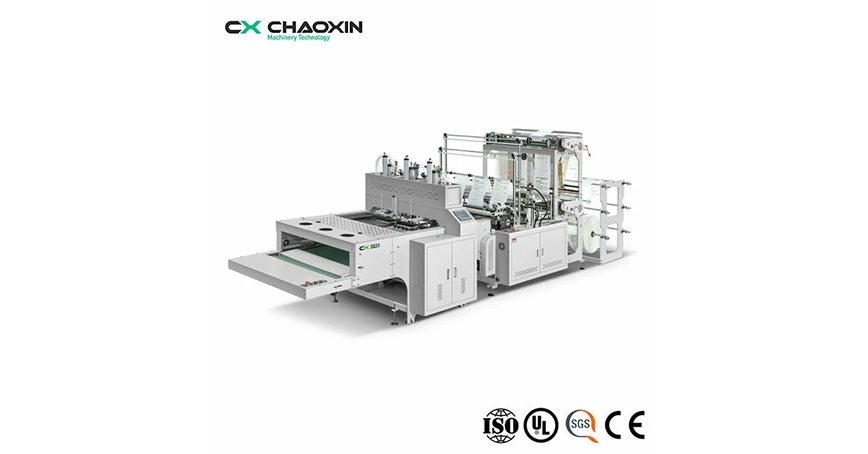
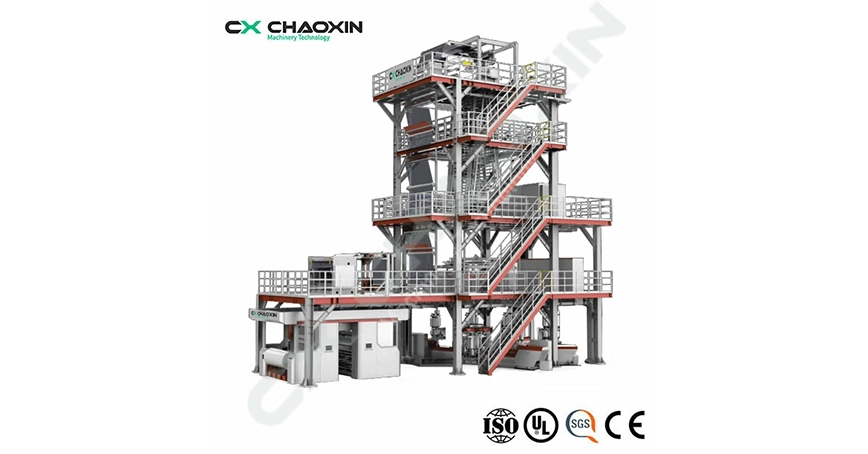
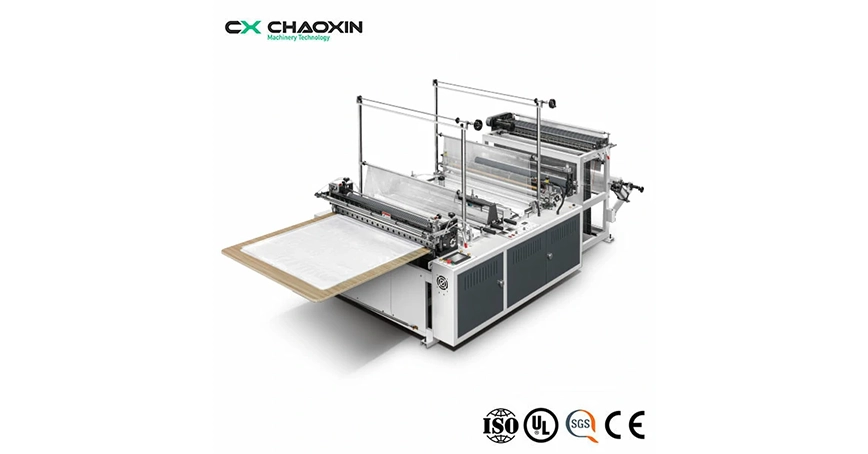
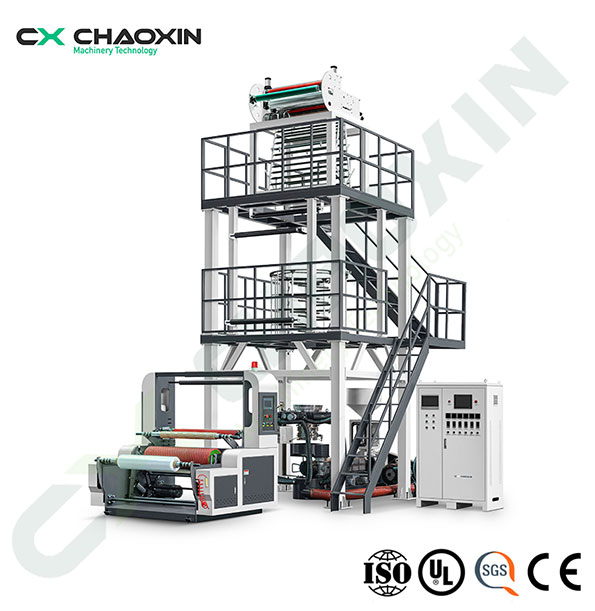
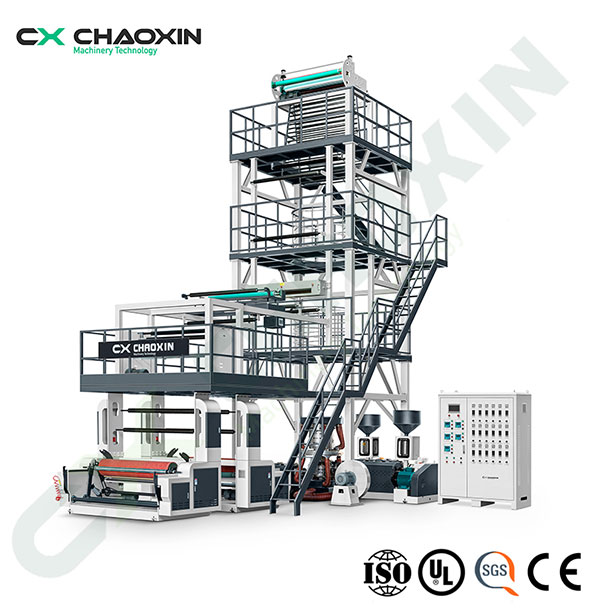
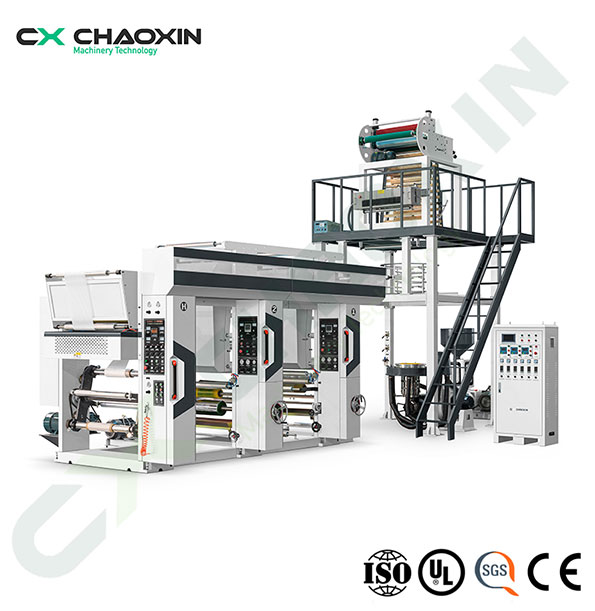
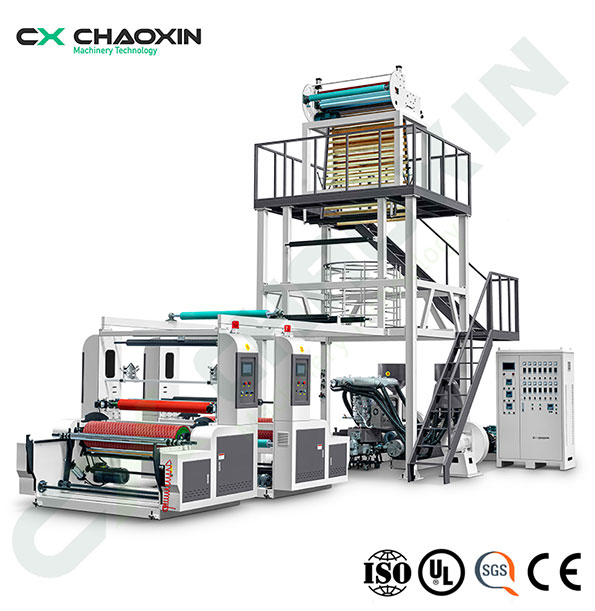
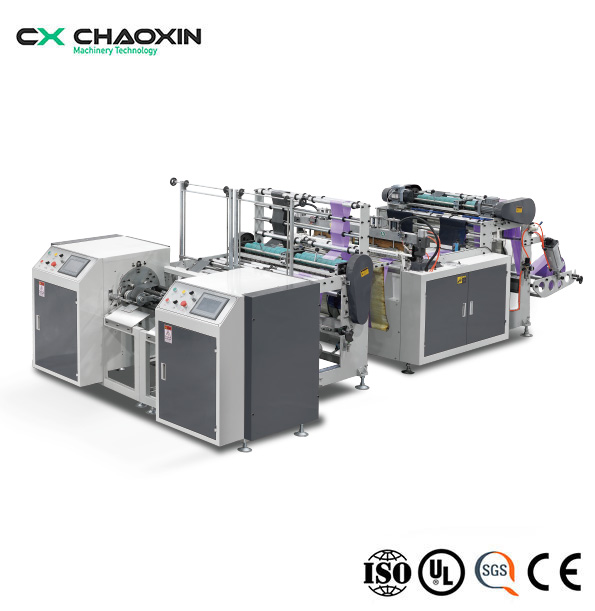
Chaoxin is well known for blown film extruders, but they also manufacture bag making equipment. Their bag lines are designed to handle plastic shopping bags, undershirt bags, garbage bags, and more – all on the same platform.
Full automation – from the roll to the stack, almost no hands‑on work. Operators simply monitor the control panel and reload film rolls.
Lower labor cost – one person can watch two machines. A manual line might need three or four. Over a year, that’s a six‑figure saving for a medium‑sized plant.
Fast changeover – swap bag styles without calling a technician. Changeover tooling is designed for quick access, with color‑coded adjustments and tool‑less clamps.
Perfect match – works seamlessly with Chaoxin blown film lines for a complete film‑to‑bag factory setup. This integration simplifies troubleshooting because one supplier is responsible for the entire line.
Chaoxin’s bag making machines are built with the same attention to stability and energy efficiency as their extruders. They use servo drives, reliable temperature control (Omron), and robust sealing bars. The result is consistent output, shift after shift.
Let’s do the math. A manual bag production line needs three or four people – one to feed film, one to pull bags, one to count and stack, and maybe a fourth to pack. An automated line needs one person to monitor the control panel. Over a year, that labor saving alone often covers the machine cost.
Then add fewer rejects. Consistent seals mean fewer leakers. Consistent cuts mean fewer misshapen bags. Your customers notice – they get bags that open easily and hold product reliably. In the competitive packaging business, quality consistency is what keeps orders coming back.
Automated machines also reduce material waste. Servo drives position film precisely, so there’s less overrun. Registration systems prevent misprints from being bagged. Some machines even include defect detection that automatically rejects bad bags, preventing them from reaching the customer.
Consider a small converter running two shifts, five days a week, producing 50,000 bags per day. Switching from a manual or semi‑automatic line to a fully automated bag making machine can reduce direct labor by three operators per shift. At $15 per hour, that’s over $100,000 in annual savings – enough to pay for a new bag line in less than a year.
One Chaoxin customer previously used two semi‑automatic bag makers, each requiring one operator to feed and another to catch and stack. That was four people per shift. After installing two fully automated Chaoxin bag lines, the same output required one operator per shift – a 75% reduction in labor. The customer recovered the equipment cost in eight months.
Yes, provided the machine has adjustable sealing pressure and temperature ranges, and the unwind tension can be calibrated for different film thicknesses. Chaoxin’s machines cover film gauges from 8 microns (very thin) up to 120 microns (heavy‑duty). Changeover between extremes may require different sealing bars, but the core machine is capable.
Daily: check seals for wear, clean photoelectric sensors, lubricate moving points. Weekly: inspect belts and gears. Monthly: calibrate temperature controllers. Servo‑driven machines require less frequent maintenance than mechanical clutch systems. Chaoxin provides a detailed maintenance schedule with each machine.
A typical bag making line can be installed and commissioned in 2‑5 days, depending on site preparation and operator training. Chaoxin offers on‑site installation and training as part of their service package.
You don’t have to buy sight unseen. Ask Chaoxin for a video of their bag making line in action – running your film, your bag size, your print registration. Or visit their factory if you’re nearby. They can run a live test and show you the stack quality.
For serious buyers, Chaoxin can also arrange a trial using your own materials at their facility. You’ll see the actual output rate, seal quality, and stack consistency before committing.
ZHEJIANG CHAOXIN MACHINERY TECHNOLOGY CO., LTD.
Booth No:12859
Time: September 28 – October 2, 2026
Add: Carrera 37 No 24. 67 Bogotá Colombia
Exhibition Hall:Centro Internacional de Negocios y Exposiciones de Bogotá (Corferias)
WEB: www.zjchaoxin.com





 English
 Pусский
 Español